Wix Musician Template
A template is a product with no onboarding: it has to sell itself in the gallery and then survive being re-skinned by someone with no design training. My first project at Wix, owned from brief to ship: the product definition, the full interaction model for the music player, and the design of the page itself. It shipped to the gallery serving 200+ million users.
The brief
For most Wix users, a template is the product: it must look professional pre-filled, and survive being re-skinned by people with no design training. The target user was an independent artist-producer who needs one page to do two jobs: sell music and brand the artist. The brief used Travis Scott as the reference, a young hip-hop and electronic musician known for his own beats.
What I owned
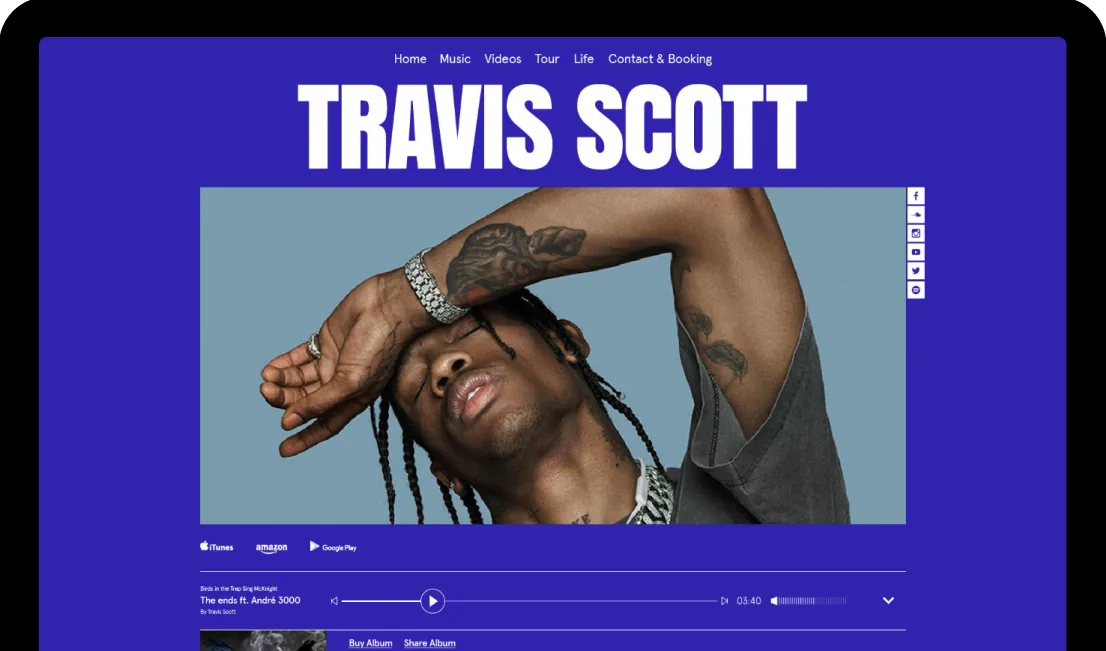
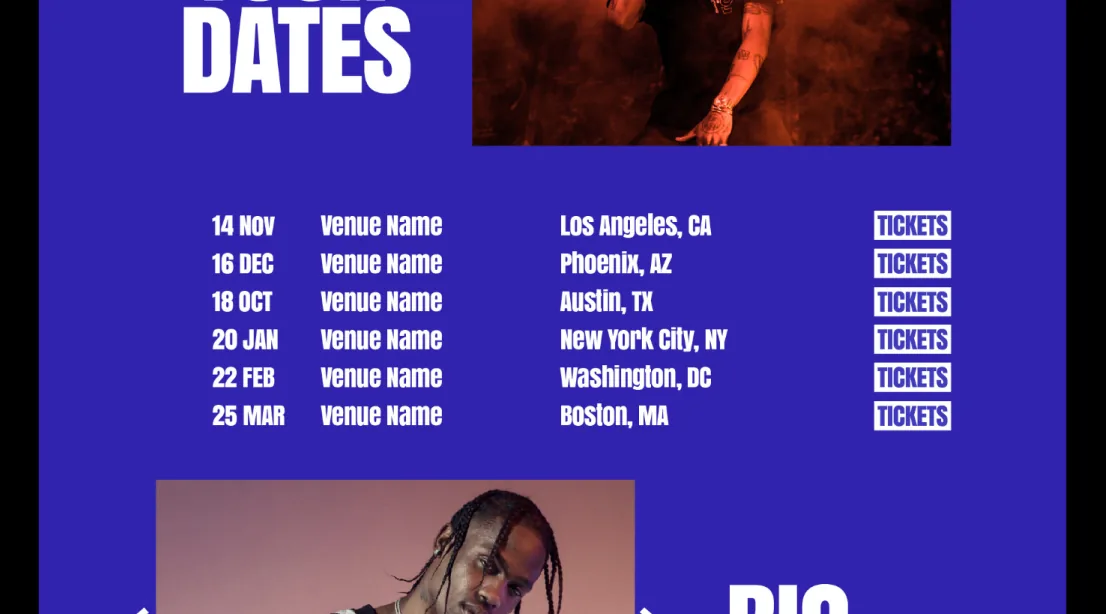
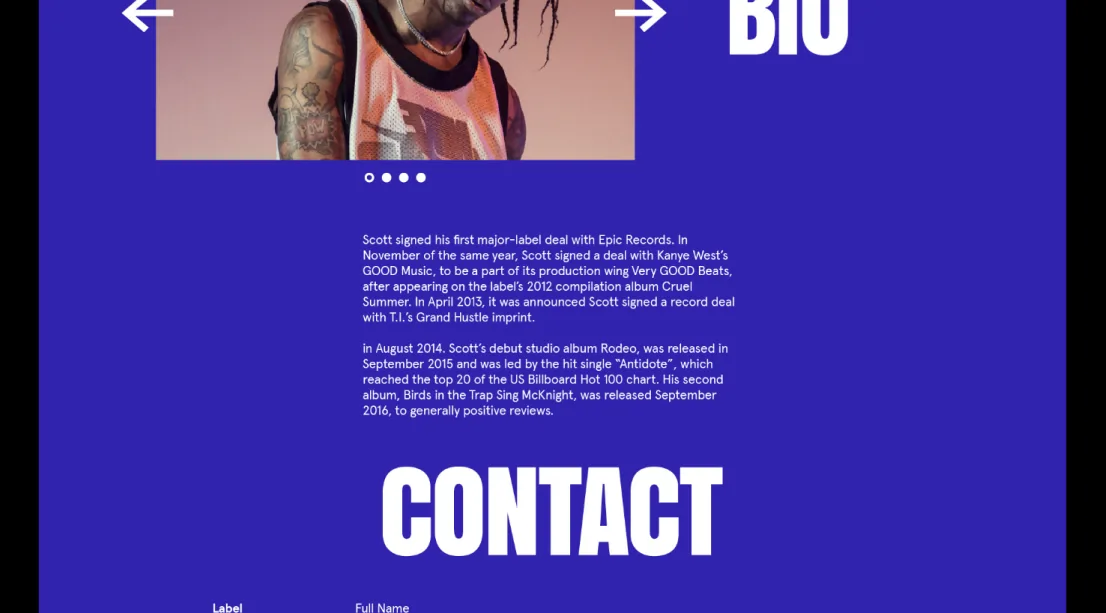
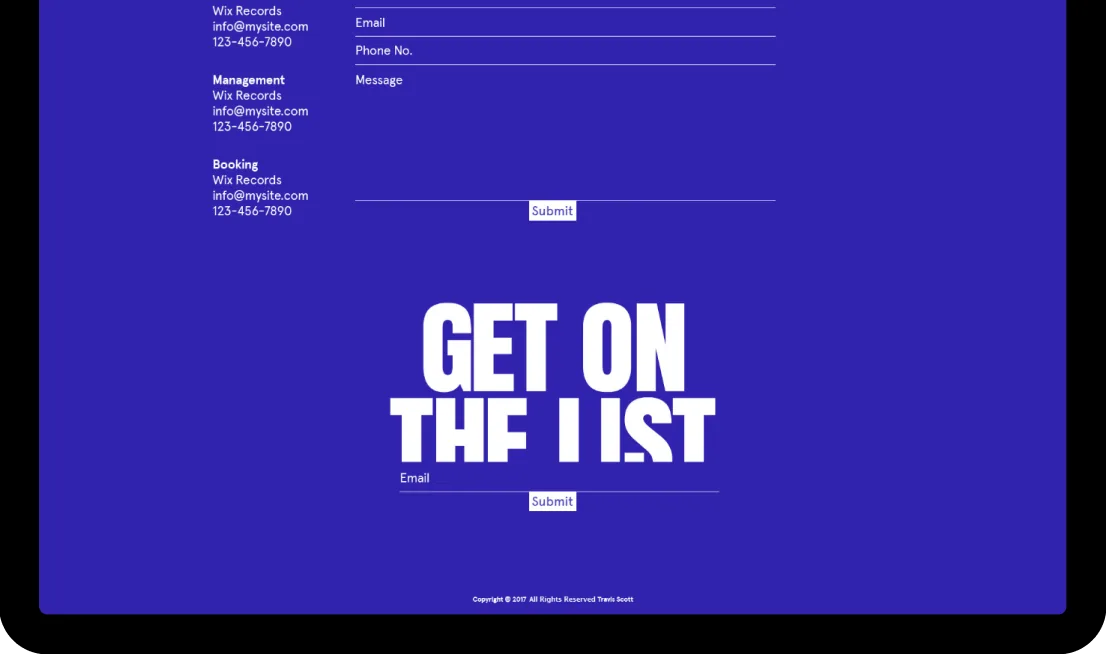
I owned the project end-to-end: defining the specification (the sections, the behaviours, the player's full interaction model) and designing the template itself. The one-pager covers navigation, shop links, the music player, video, tour dates, bio and gallery, booking and contact, and mailing-list signup.
Interaction model
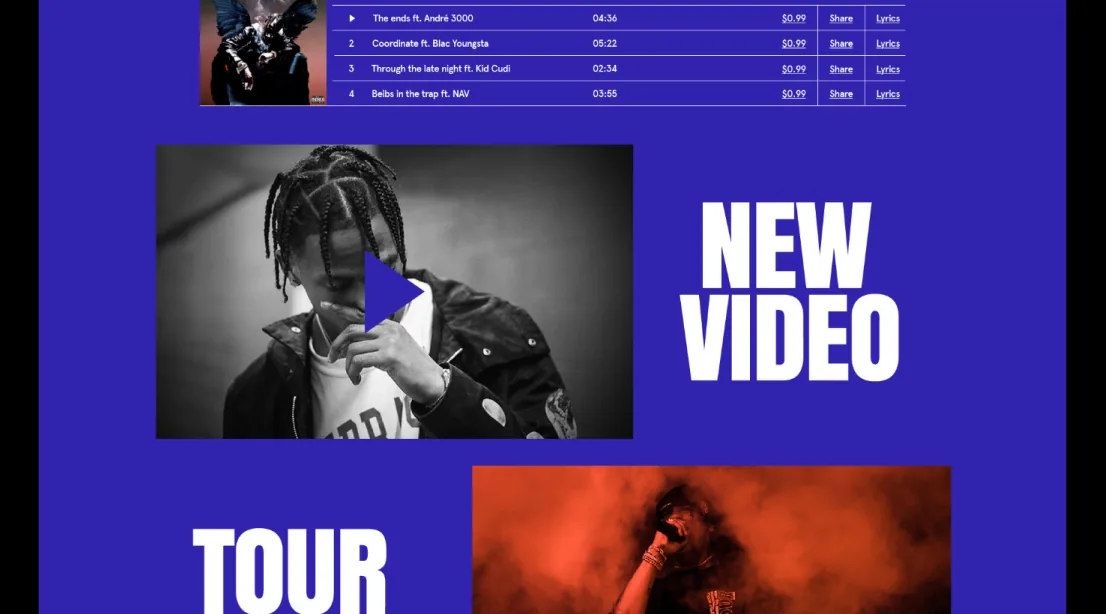
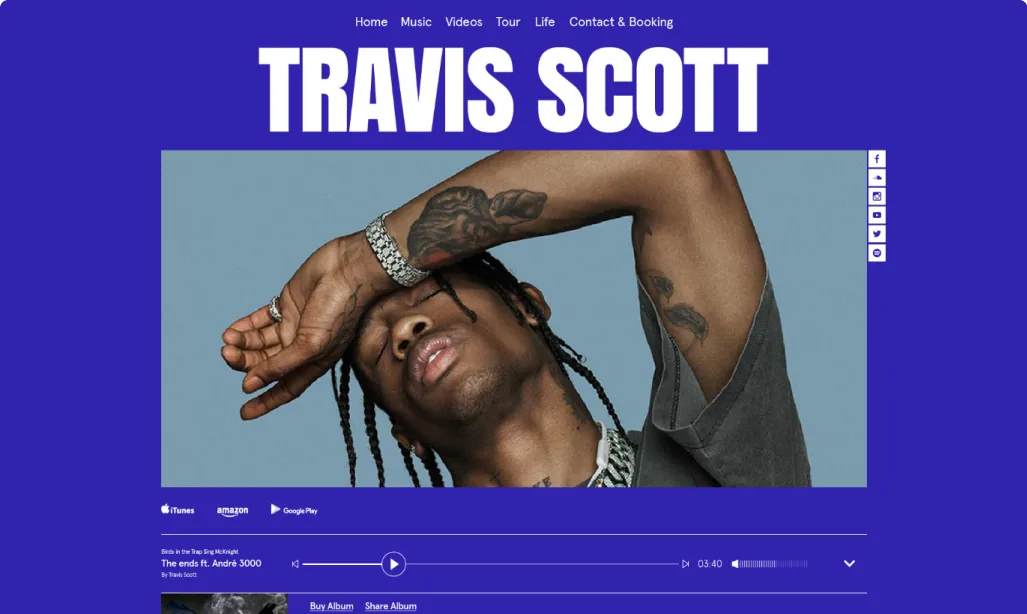
The music player carried the template's two goals at once: listening and selling. I specified the complete interaction model: track info and album art, full transport controls, a four-track list, share actions per track and per album, buy actions per track and per album, and a lyrics pop-up. The player collapses between two views, showing or hiding the album cover and track list, so it works both as a hero element and as a compact companion.
Visual system
Visually, I committed to a single saturated electric blue with oversized condensed typography: a system bold enough to brand an artist before any customization, and structurally simple enough to survive whatever a musician throws at it. Designing a template means designing for someone else's content; the demo content is the argument, the structure is the product.